Rammed earth has great sound absorbing properties and attenuation (up to STC 57) which inhibits noise transfer between rooms extremely effectively. CSIRO tests indicate a sound transmission rating of over 50 decibels for a rammed earth wall of 250mm. It also helps stop sound reverberation, which makes it great for musical uses and is why it was chosen by acoustic engineers in a multi-million dollar, 150 seat concert hall in South Australia. It is to be constructed by Jurlique founder at Mount Barker. Read more about this project at this link.
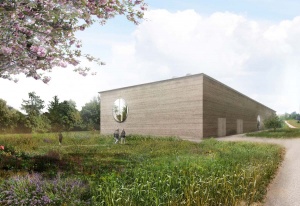
Other examples the use of rammed earth specifically for the acoustic properties are the Wales Institute for sustainable Education WISE theater below
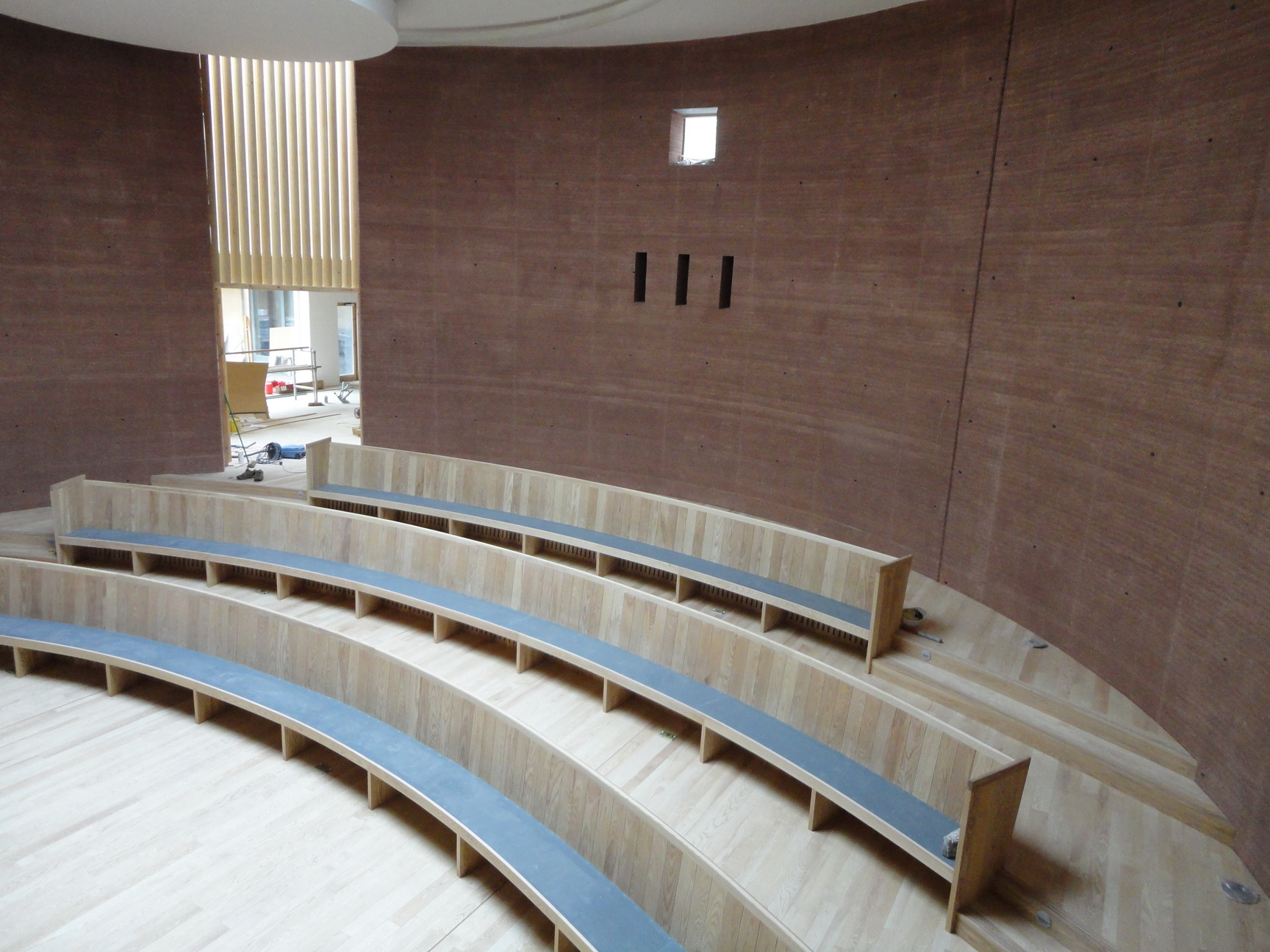
and the Martin Rauch designed Cinema Sil Plaz in Switzerland.
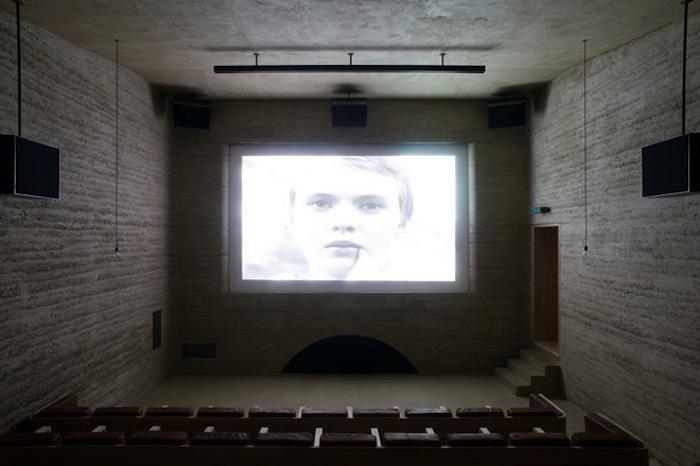
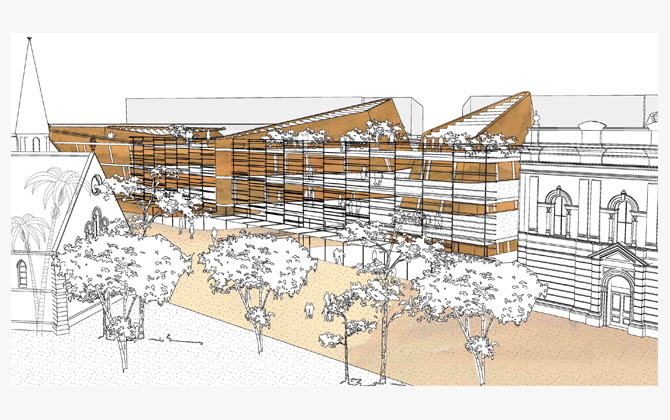
 Rammed Earth has always been a great material for libraries, as it keeps the humidity and moisture low, helping preserve the books. Luigi Rosselli Architects has designed a beautiful entry to the Kings Square competition in Freemantle, Perth, Western Australia. The use of Rammed Earth is as much for its function as it is for its aesthetic, as it should be.

It incorporates a “thermal stack” which is used extensively by ancient architecture for arid environements which creates passive air-conditioning. As they say “The design solution of the stacks uses the same clay hydroscopic capacity to cool down when air circulation evaporates the humidity absorbed by the day. Together with drawing air from a cooler basement, thermal mass and passive solar skylight system at the top, the stack becomes an air conditioner to the building.”
 I admire Luigi Rosselli Architects in their understanding and knowledge of the materials, utilising the hydroscopic attributes. “This natural ventilation and lighting system is a key component of the design, making the rammed earth volumes both sculptural and functional.” Here’s hoping they are successful and this fine example of functionality becomes a reality! All photos copyright of Luigi Rosselli Architects.
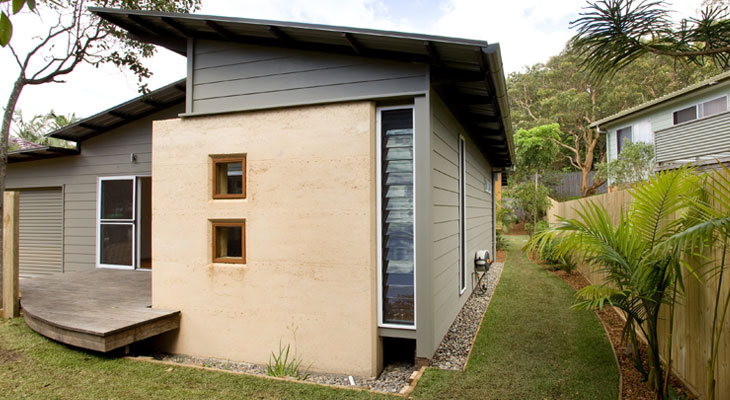
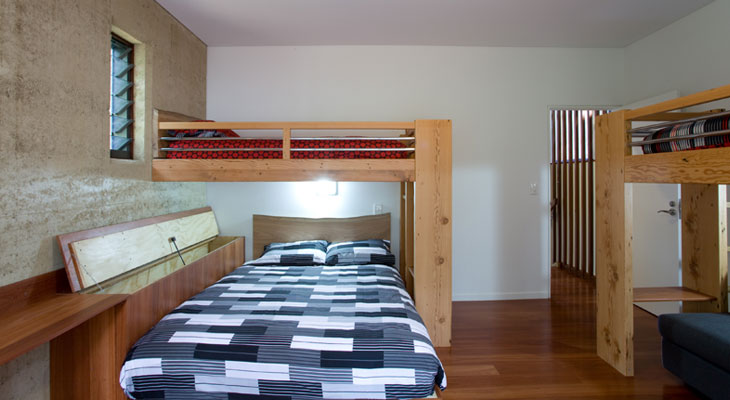
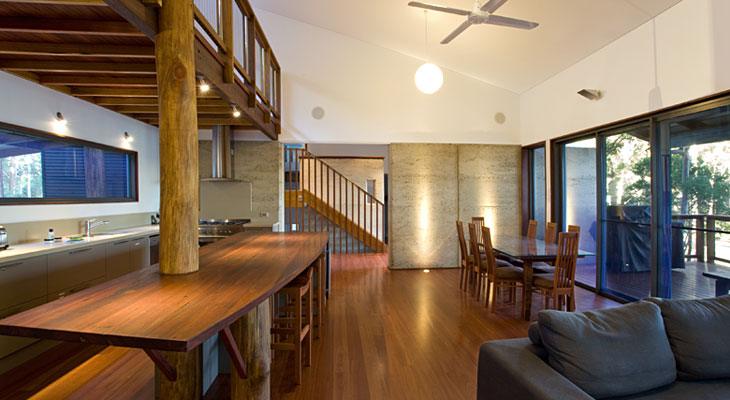
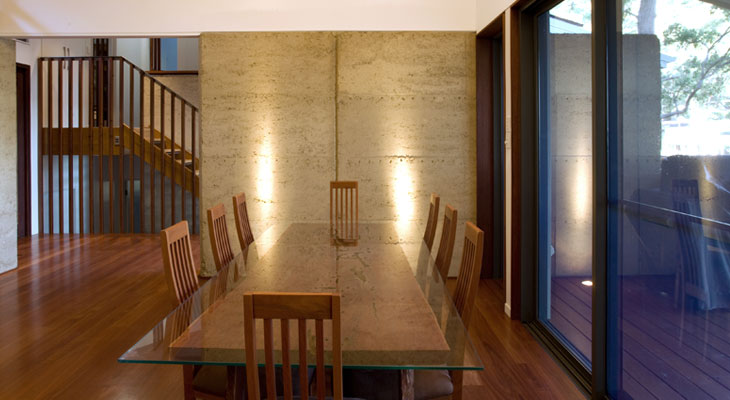
I came across some photos of some rammed earth work that Cookie and I did at Pacific Palms on the mid north coast of NSW. One job, the Elliot House at Boomerang Beach was designed and built by Gav Scott at earthBound. The other, dux nutz at Smiths Lake was designed by Architect Ian Sercombe, and built by Gav earthBound. Pacific Palms area is great place to come and look at some earth houses. Contact myself, or Gav, or Ian for more info.
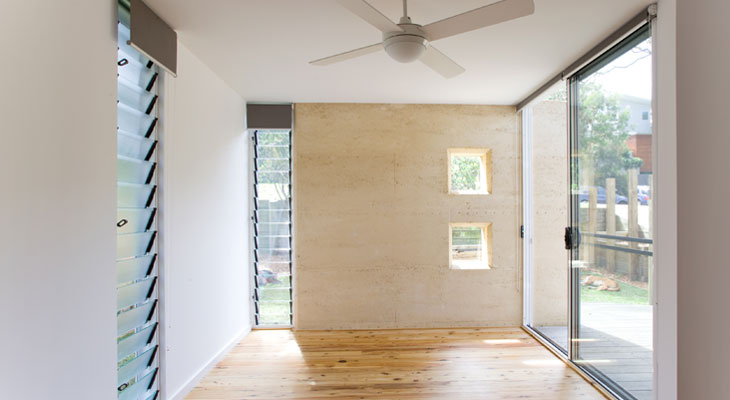
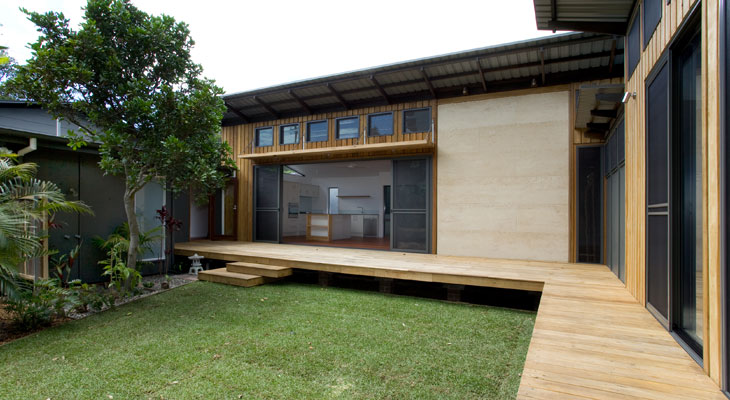
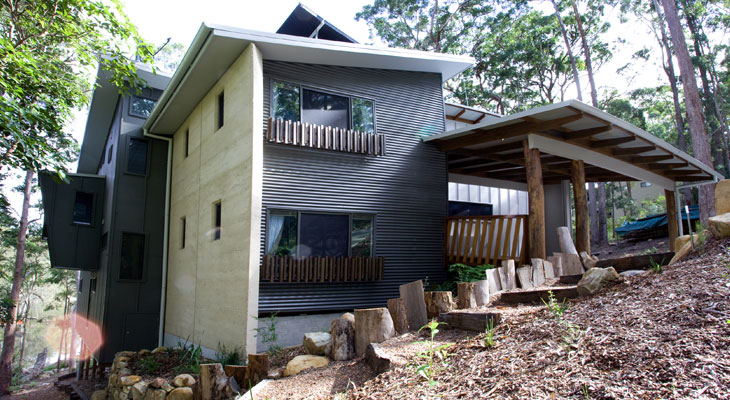
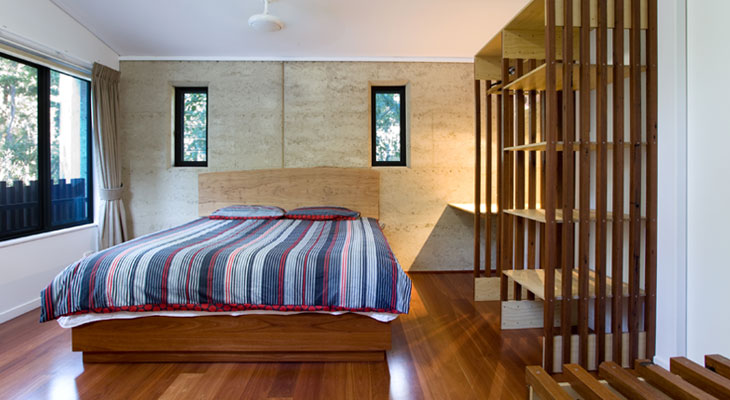
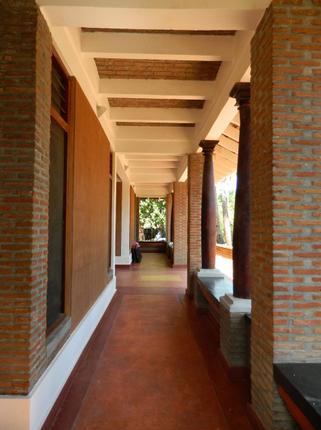 The Hindu is probably one of the most widely read newspapers in the world. In a recent article they describe and summed up the benefits of rammed earth better than any mainstream media I have seem.
“To appreciate this house as it deserves to be, step inside the house at midday in the peak of summer. Its oxide floors and the rammed mud walls still feel cold against the skin, there is a pleasant and refreshing draft at any spot of the house you wander to, even its exposed brick terrace. Well, this house ‘Arulville’ is a tribute to the amazing functionality and climate-controlling ability of indigenous architecture. Un-plastered rammed earth walls allow the house to breathe through its walls and keep the ambient temperature cool.”
They are talking about a house called Arulville. The architect, Anthony Raj describes his work as “nature-positive, regenerative architecture at work”. Read the whole article here.
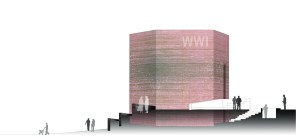 Mulloway Studio are one of three second stage entrants in an international architectural design competition to design separate, but complementary Memorials to World War I and World War II sited along the land axis in Canberra, Australia.
The design strategy explores the relationship between people and the earth (place and nation), the individual and society, and the notion of loss and absence.
 Constructed from Australian soil from around the country, the memorials rise above the surface and push down into the soil, creating gaps in the earth – a contemplative chamber – reflecting the collective weight of loss and absence. A series of light transmitting fibre-optics are embedded in the solid rammed earth, each representing 100 lives/deaths.

 I recently stumbled onto a new project by the incredible Martin Rauch. A man who likes pushing the artistic boundaries for modern rammed earth. Matrin has started pre-casting rammed earth panels in a factory for construction of the facade of the Ricola Herb Centre in Switzerland. Whilst not the first time this has been done, it is the first of this scale to my knowledge. It appears that there will be a clay render finish coat to cover the joins, which is quite traditional in many parts of the world and offers a great weather coat.
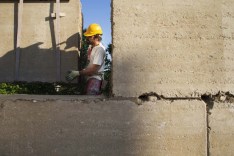
The pre-casting has a potential for enabling low cost, low embodied energy, high thermal mass products, especially on sites with access problems, or projects that require one or two high mass walls. It would be interesting to see the costings on doing such a project. I do wonder if trading local employment for trucks and machinery is the ethical thing to do but I am sure there are situations where it will work well. It works for fired bricks. Food for thought. More info can be found here.
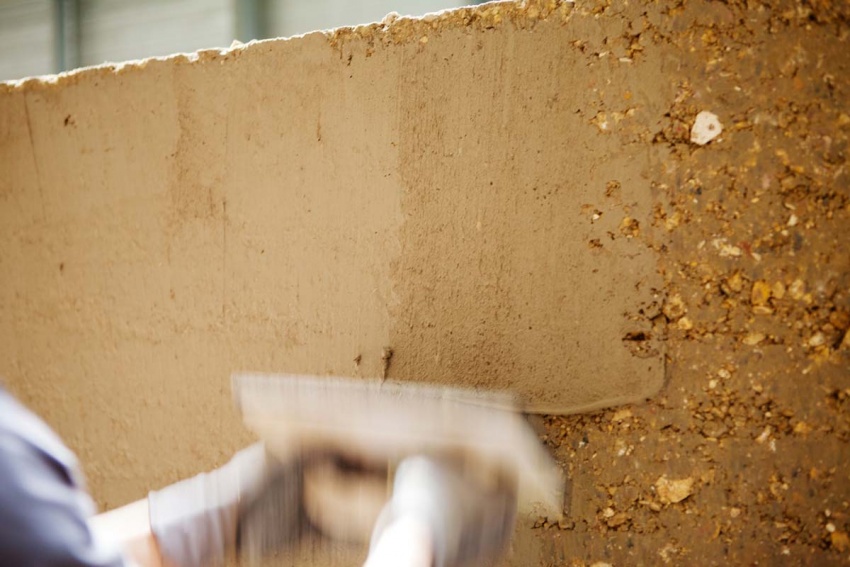
Here is a video on the structural properties:

The Chinese term Tulou (tu – earth lou – dwelling) refers to a style of building that in 2008 the UNESCO registered as World Heritage Site, There were up to 20,000 tulou built. Set amongst rice, tea and tobacco fields the Tulou are earthen houses. Several storeys high, they are built along an inward-looking, circular or square floor plan as housing for up to 800 people each.

They were built for defence purposes around a central open courtyard with only one entrance and windows to the outside only above the first floor. Housing a whole clan, the houses functioned as village units and were known as “a little kingdom for the family” or “bustling small city.” They feature tall fortified mud walls capped by tiled roofs with wide over-hanging eaves. The most elaborate structures date back to the 17th and 18th centuries.
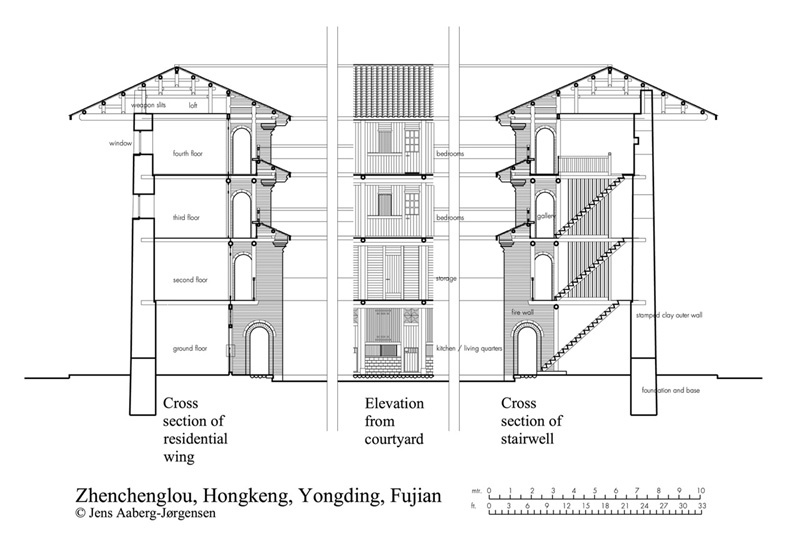
The buildings were divided vertically between families with each disposing of two or three rooms on each floor. In contrast with their plain exterior, the inside of the tulou were built for comfort and were often highly decorated. They are inscribed as exceptional examples of a building tradition and function exemplifying a particular type of communal living and defensive organization, and, in terms of their harmonious relationship with their environment, an outstanding example of human settlement.
 There were around 20,000 built and were mistaken for missile Silos during the cold war. They were built using clays, sand and LIME. They were built using simple slip forms.

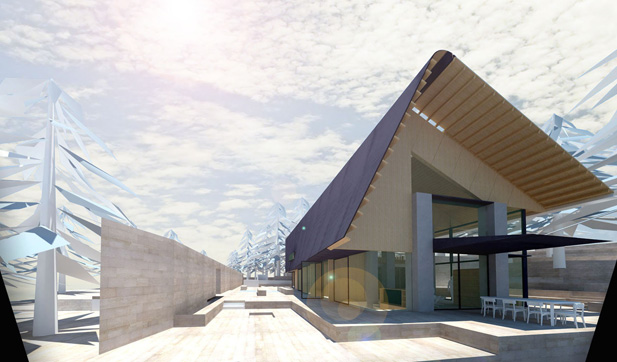
This is our latest effort in the Blue Mountains town of Wentworth Falls, near Sydney, Australia, for renowned architect Peter Stutchbury.

This garden feature wall is 53 meters long and 600 mm thick. There will be a water feature flowing in front of it, kind of mimicking the nearby Wentworth Falls. It also provides a nice contrast to beautifully constructed but expansive concrete walls. Being a thermally efficient obsessed practitioner, I feel it is misplaced thermal mass, but the sheer scale and beauty is overwhelming.
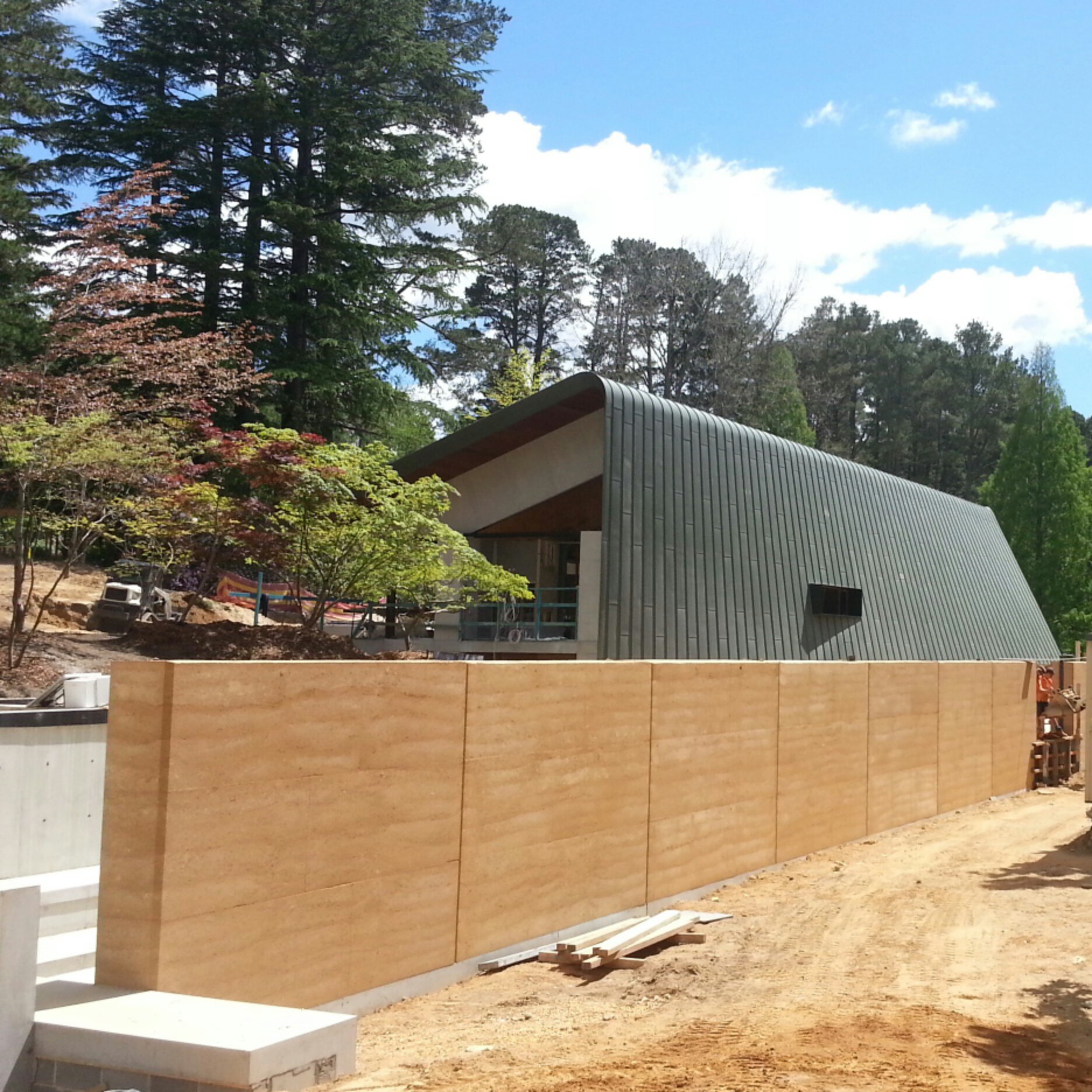
It has been a privilege to work on this project and all involved. Looking forward to seeing the finished project.
 A Neo Gothic church was located in no mans land between the east and west Berlin Borders. The church building was destroyed in 1985 in order ‘to increase the security, order and cleanliness on the state border with West Berlin’. Five years later the Berlin wall was pulled down.
The Berlin architects Rudolf Reitermann and Peter Sassenroth and Austrian rammed earth specialist Martin Rauch built this amazing curved rammed earth structure to place the destroyed church. The new Chapel of Reconciliation ‘unites architectural and ecological modernity with remembrance, standing as a triumph against its predecessor’s destruction’.
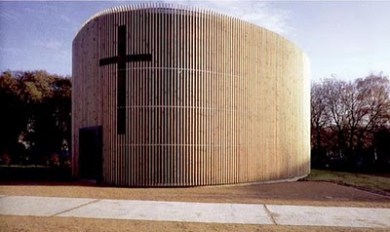
The church was officially opened on the 9th November 2000, the 11th anniverary of the fall of the Berlin wall. Curved rammed earth walls are a beautiful use of the material with its soft gentle lines. It is also the functionally a great use of the material. A curve, like a corner makes for a very strong structural element. This building inspired me to build my house with curved rammed earth walls using the Fibonacci sequence. One day I will finish the last few jobs and post some photos.

I recently spent some time in the deserts of Australia and was shocked at the conditions of housing at some the Aboriginal communities. For aboriginal people whose earth is their soul and creativity, why aren’t they living in some type of earth dwelling? It would surely help improve their social, cultural and health issues.
At a recent sustainability conference in Kyoto, Japan, an interesting paper was presented on the sustainability of rammed earth as a building material, especially for remote indigenous communities. The paper was presented by Daniela Ciancio and Chris Beckett from the University of Western Australia.
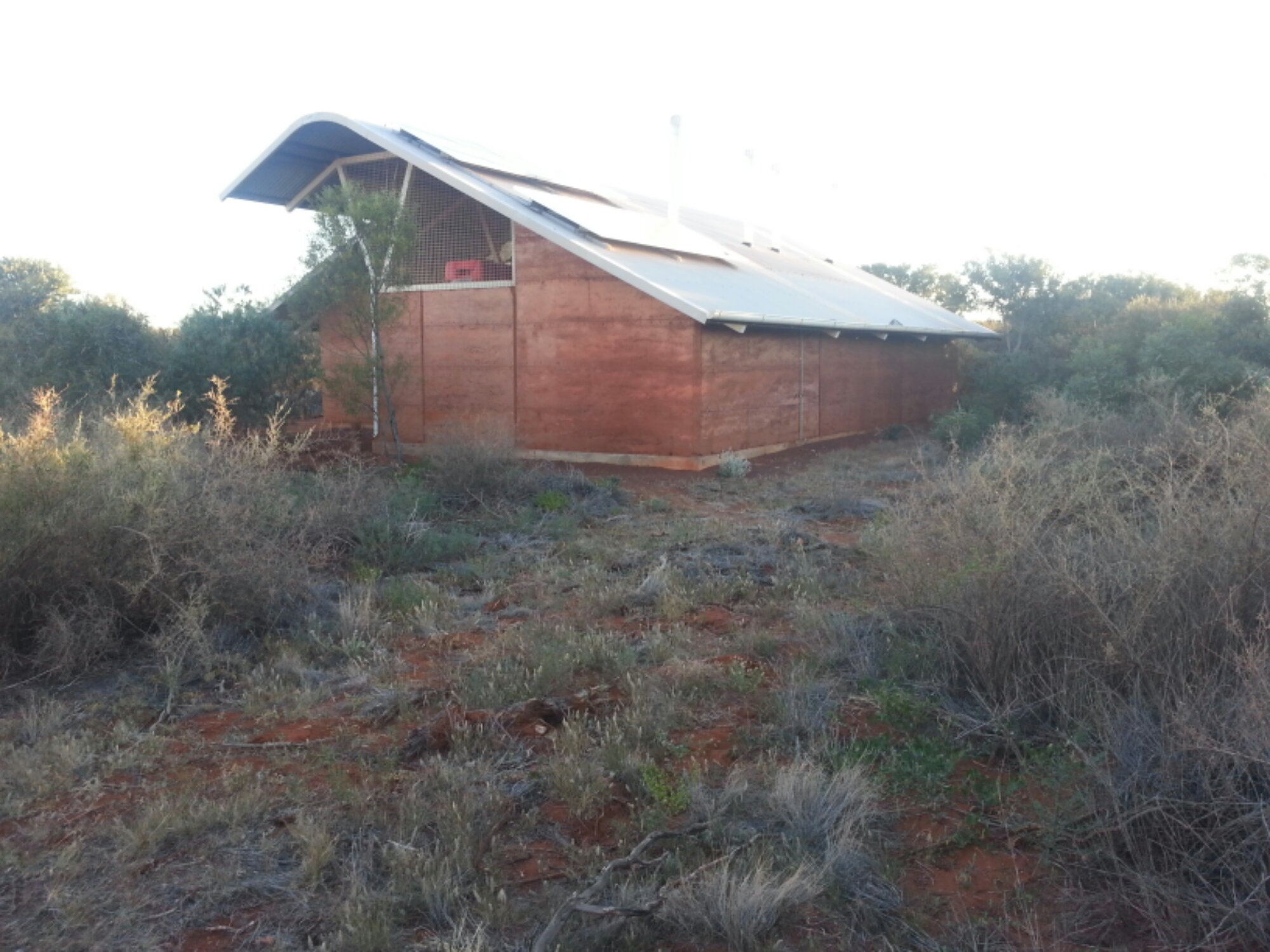
The authors suggested that rammed earth is a “viable alternative to other more common building materials like concrete and steel” and could be promoted in “any part of the world affected by remoteness, scarceness of energy resources and poverty.”
“In hot arid climatic zones, by simply applying some traditional design features it might be possible to create a
comfortable living space without any artificial air conditioning devices.” These principles can be extended to a wider range of climatic regions if simple solar passive designs are applied to the dwellings.
Read a PDF of the paper at the following link paper Ciancio-Beckett






 Earth Dwellings