Posts from the ‘Uncategorized’ Category
We believe this is the first rammed earth building in Newcastle, NSW on the east coast of Australia. We are using a local sandstone material which some architects like to call rammed sanstone.
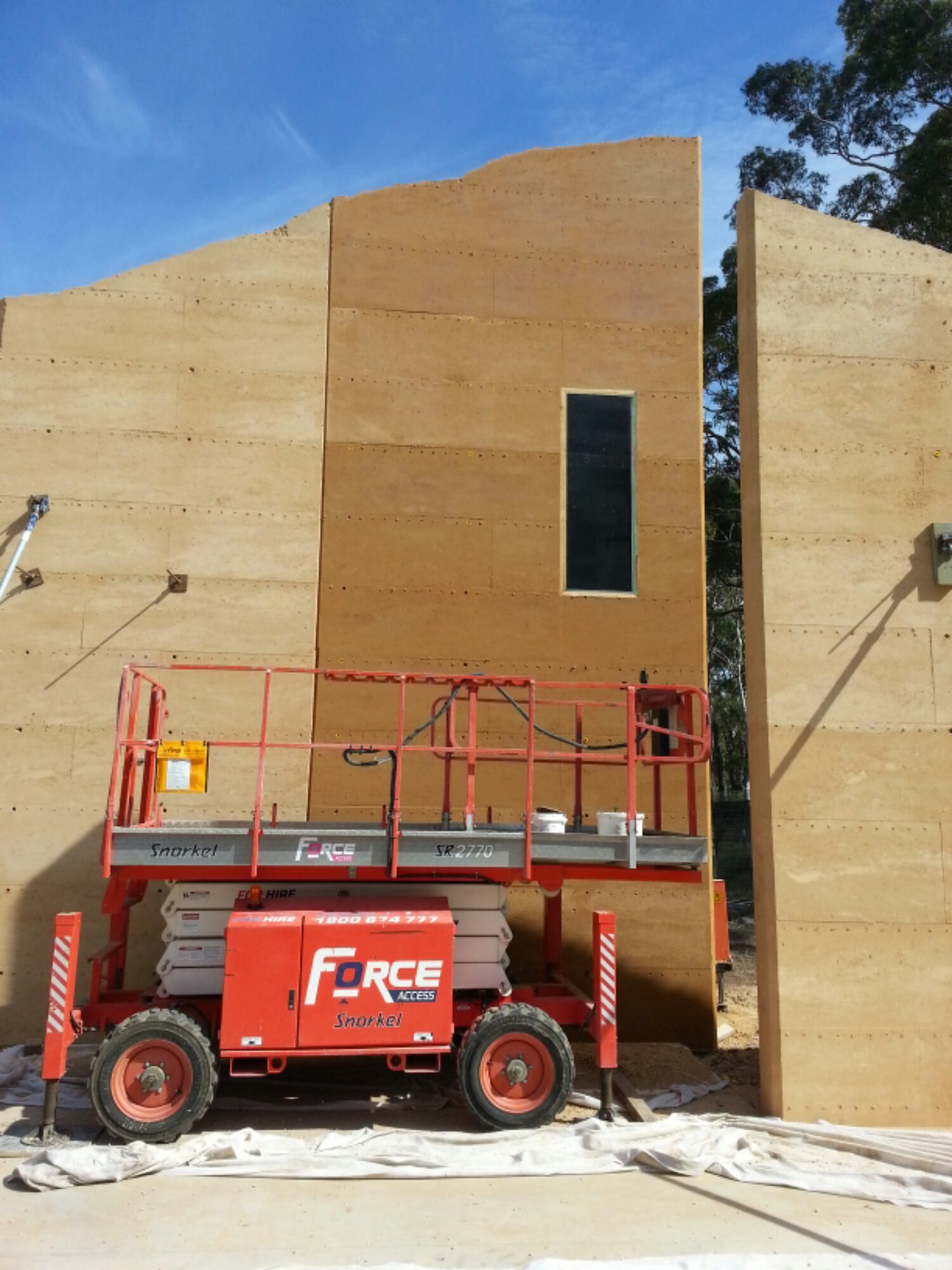
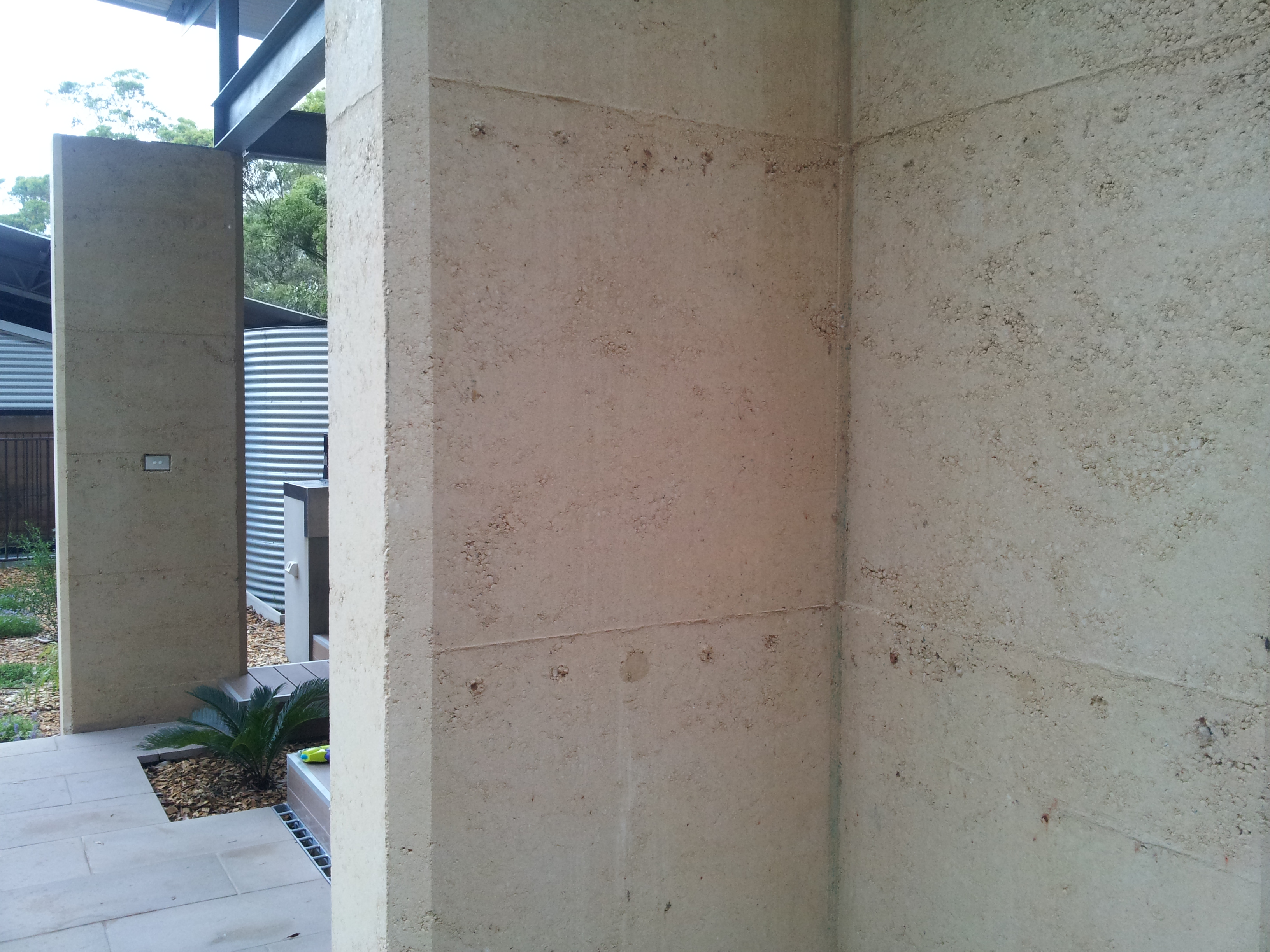
The photo above shows a freshly ‘stripped’ wall between two older walls. The black box is a window blockout that will be removed in a few days.
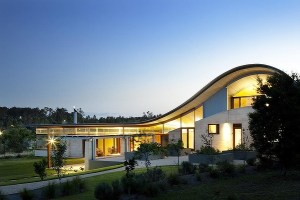
An older project was recently finished in the Hunter Valley. It was a interesting project with curved walls and a smooth wave roof designed by James Stockwell. Image by Patrick Bingham-Hall. Read and see more at this link.

Earth buildings has traditionally been open source. We are going to provide open source building designs that are thermally very efficient plus being comfortable and healthy to live in.
As well as having low to nil running costs, they will also have a low construction cost with low embodied energy. Click here to view our open source house plans or view our first design Sun Salutations.
Being open source, we are happy to talk to other people in enabling efficient earth building throughout the world. Hopefully we will have a another smaller plan out soon.
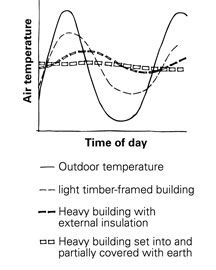 I am often asked where to go to get more information on solar passive and sustainable designs. I always suggest this Australian government web site, Your Home. It has a technical guide to help the design, construction or renovation of homes to be comfortable, healthy and more environmentally sustainable. The passive design section gives a great explanation of an efficient house and has a great run down on thermal mass!
It also gives 25 case studies of new houses and renovations. It also provides a checklist which would be handy to take to meeting with architects, designers or display homes.

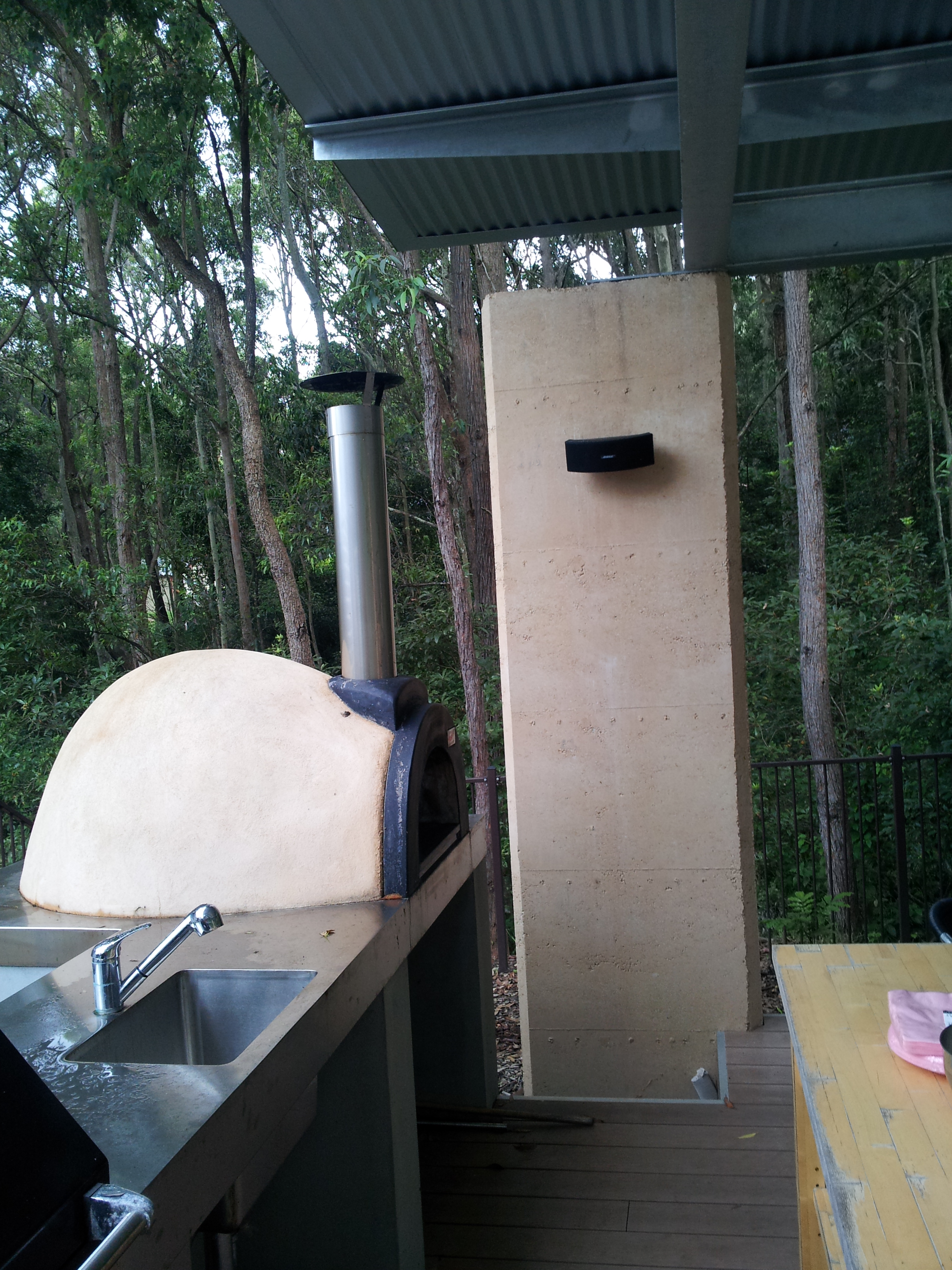
These are some rammed earth walls constructed in Newcastle, NSW Australia for cob oven and pool side shelter. It uses a Ryteck sandwich panel roof. Not 100% sold on this roofing system, but offers lots of possibilities with a quick construction and good insulation for remote areas locations. Obviously designed for that climatic zone!

I recently had a look around the Surf Coast and Great Ocean Road in southern Victoria, Australia. It was amazing to see the size and scale of the walls. The local Surf Coast Council has a large curved feature wall that was 500mm thick that greets visitors to the Torquay and Bells Beach region.
Talking of massive, the RACV resort in Torquay is would arguably be the largest modern earth building with huge arcing walls. Some walls look 8 meters tall and are atleast 500mm thick!
There would be thousands of square meters of rammed earth with pre-cast panels and loads of internal walls. The building was designed by Wood/Marsh Architects
Finally at the other end of the Great Ocean Road at Apollo Bay we visited this residential building under construction that had 8m high walls and were 600mm thick stabilised insulated rammed earth. Double the thickness of the standard 300mm thich walls.
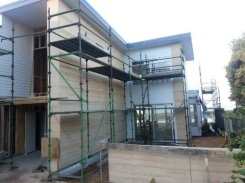
Just another example of designers going for the chunkier, thicker walls. It really does give the house loads of body and integrity!
Thermal mass is a well known term but is not that widely understood, unlike insulation. It is an under rated ingredient of comfortable healthy indoor environments. But thermal mass can either be your best friend or worst enemy, it all depends on how it is used in the building envelope.
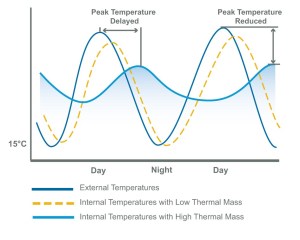
Light weight (no thermal mass) and heavy weight (lots of thermal mass) dwellings do not behave the same and are usually operated differently by the occupants. Heavy weight dwellings are much less sensitive to problems caused by over glazing. Thermal mass delays and reduces the transfer of heat.
Here are some values of the Volumetric Heat Capacity of materials in kJ/m3K:-
– Air 1
– Glass wool 11
– Aerated concrete block 525
– Brickwork 1454
– Mud Brick 1500
– Rammed earth 1800
– Concrete 2000
– Water 4192
So concrete has a high VHC rating but when you compare a 90mm concrete wall with a 300mm rammed earth wall, rammed earth provides almost 3 times the thermal mass.

Externally isolated thermal mass
The easiest way to explain thermal mass is to use water as an example. If you add energy to heat or cool a body of water and place it in thermos Flask, the energy of the waters’ thermal mass will last for many days. Take the lid off the the thermos, and the energy will be lost in an hour. So if you put that theory into house design, any internal thermal mass that is insulated from the outside will help smooth the peaks and troughs through a process called thermal lag. Any energy introduced into a high thermal mass building will be stored longer, acting like a hot water bottle.
The key to appropriate thermal mass is using solar passive principles for your climate. In temperate or sub tropical climates, allowing the sun to warm the walls in summer and shade them in winter help the performance of the dwelling. So high mass external northern walls in the southern hemisphere and external southern wall in the northern hemisphere will generally work well. Conversely, high mass walls that never receive the sun in winter will constantly leak heat as they have little insulation value and the heat escapes too easily, similar to having too much single glazing on a wall that never sees the sun.
This all changes for climates with high diurnal changes in temperature. Desert like environments that are hot in the day and cold at night can have high thermal mass every where as the temperature is constantly going over and under the comfortable internal temperature, so the thermal mass will even this out. Tropical climates can benefit with appropriate thermal mass but care needs to be applied.
Earth as thermal mass will also help regulate the humidity of a building, making it even more comfortable for the occupants. This has been used for thousands of years but is over looked in modern buildings. The science of this is called Hygrothermal behaviour and it pertains to the movement of heat and moisture through buildings.
Approximately six times as much heat passes through a mud brick or rammed earth wall compared to an insulated brick veneer wall. This works well if you are using earth walls facing to the sun (but shaded from the sun in summer), as it allows for natural air changes, without loosing the thermal benefits. This effect has been termed “natural air conditioning”.
When evaluating thermal mass, you also need to consider the amount of embodied energy in the materials, the longevity of that product and the disposal of the thermal mass at the end of the life cycle. More on this in future posts. Please subscribe.
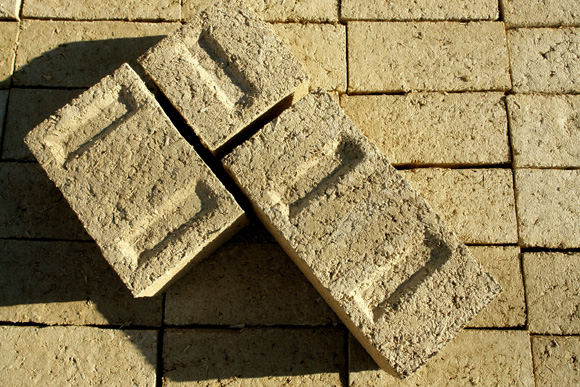 I have always loved hemp products, like the fabric on our our furniture, to the hemp seed oil used as an aftershave/moisturiser. Hemp has an amazing “data sheet”, with a huge array of uses for the fibre and oils and the sustainable way it can be farmed and help restore the lands health. Add this to the fine list of credentials Cannabric .
Cannabric is created by the Spanish living German architect, Monika Brümmer, who specialises in ecological and bioclimatic architecture, as well as restoration of historic buildings and rehabilitation of traditional cave dwellings. These bricks are made from completely natural raw materials -vegetable material, natural and mineral bonding agents and recycled materials.
Cannabric has a GWP (global warming potential) of – 0.624 kg CO2eq/kg, which is a negative carbon rating. External walls are load beearing (300mm) and it has good thermal mass properties and an insulation rating of R2.1.
Monika says “Before dominating denatured materials in our environment, such as reinforced concrete, synthetic insulators and chemical varnishes etc., there were impressive examples of building with nature and we need to re-discover these techniques and reinterpret them towards a contemporary eco-architecture with the traditional background, opening new horizons with current technologies that are compatible with a healthy , habitable and environmental friendly housing.”
There is also an example “structural compacted walls with hemp mortar” which looks like rammed earth/hemp.
As well as hemp bricks, cannabric also provides hemp insulation. This is a great solution to petrochemical alternatives. Wouldn’t it be good to see the hemp industries and products thrive around the world. Here’s hoping! Cannabric is a great start!
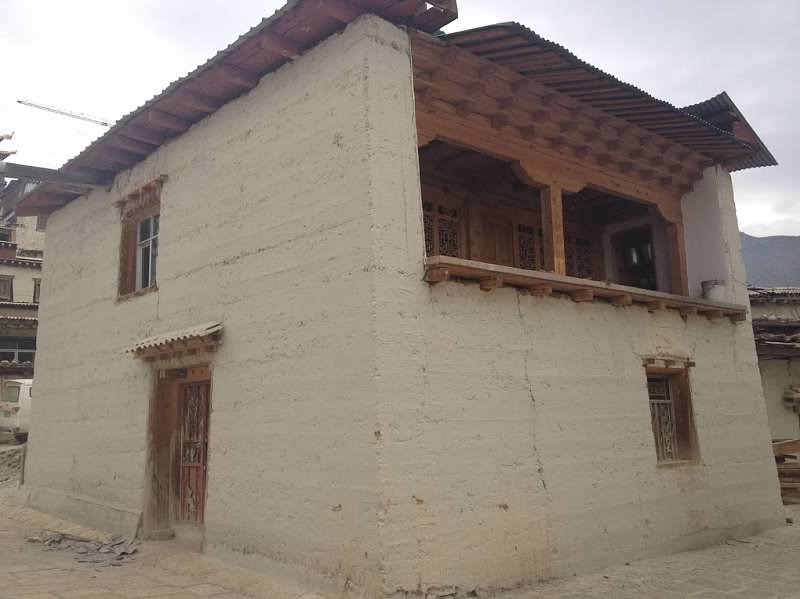 Tibet has such an amazing rammed earth heritage. I have been helping out Yeshi Gyetsa from Ringa Mountain Eco retreat who is doing some amazing work in developing the rammed earth culture.
His town is in the beautiful rural Dechen Tibetan Autonomous Prefuncture in Yunnan was renamed “Shangri-la” in 2002, and it has seen a rise in tourism over the past 10 years. The Ringa Mountain Farm is an ecological building project which will ultimately create an eco-farm and guesthouse by the end of 2014

As Yeahi says rammed earth is the “only and dominant way of vernacular construction in our region with the exception of the urban area where modern materials have taken over”. Have a look at this video of rammed earth in Tibet, its amazing! The walls are all 1 metre thick. The finished houses have massive amounts of timber! This new eco-farm will have a long-lasting effect on the livelihood of the community, while respecting the local environment and culture.
The architecture is truly amazing on such a grand scale. The building is very seasonal but provides employment to many communities. Wouldn’t it be great to see this not only preserved but also this ‘style’ encouraged in “modern times”.
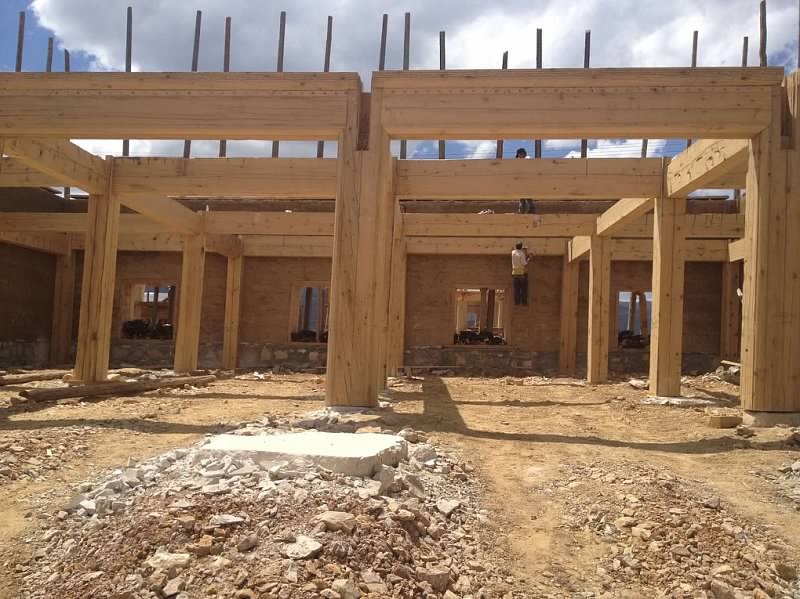 He is trying to improve efficiencies in the construction process to save resources and stop the “modern materials taking over”. They are probably using more resources (timber) than they need. Have a look at the size of the beam this man is standing next to! They are in need of sponsors to help finish the project. Please visit them at www.ringafarm.shutterfly.com.


Earth USA 2013 is the seventh conference on architecture and construction with Earth Materials. It is organised by Adobe in Action and includes adobe, rammed earth, compressed earth blocks and cob.
EarthUSA 2013 is being in Santa Fe, New Mexico on the 4 and 5th of October, with a local earth building tour on the 6th.
There is a huge amount of information in their conference archive – Earth USA 2013






 Earth Dwellings
